Getting from A to B in BC: What We Heard from nearly 600 Residents about their Sustainable Travel Choices.
 July 14, 2026
Every day across British Columbia, thousands of individual journeys unfold, journeys which look different from one person to the next. Communities are working toward transportation systems that are more connected, sustainable, and accessible for everyone. Reducing reliance on single-occupancy vehicles and supporting options like walking, biking, transit, and shared mobility are key parts of this shift, but making these changes requires a clear understanding of people’s real, day-to-day travel experiences.
Understanding travel patterns helps reveal why people make the travel choices they do and what barriers may exist to using alternative modes of transport to get from A to B. To explore this in more detail, Bunt recently launched a BC-wide survey to understand how people travel for work, school, and personal trips, and what encourages or prevents the use of more sustainable travel options.
We heard from nearly 600 BC Residents, providing valuable insight into how travel choices are made across the province and helping to inform more effective Transportation Demand Management strategies that reflect the realities of everyday life.
What We Heard: Travel Choices & Opportunities
Transportation decisions are influenced by a range of practical considerations, including convenience, travel time, safety, cost, and access to reliable transportation options. While many respondents expressed openness to using more sustainable travel modes, the findings suggest that willingness to shift travel behaviour is closely tied to whether these options are practical, comfortable, and competitive with driving.
Our transportation survey helped us understand key factors that encourage, and discourage, the use of sustainable transportation options across different trip types.
A Community Open to Change
Participants were invited to share their experiences related to work, school, and personal or recreational trips, with the option to respond to one or multiple trip types. For each trip type, respondents were asked about their use of biking, transit, carshare, and shared bike or scooter services, including whether they currently use these modes, would consider using them, or would not consider them.
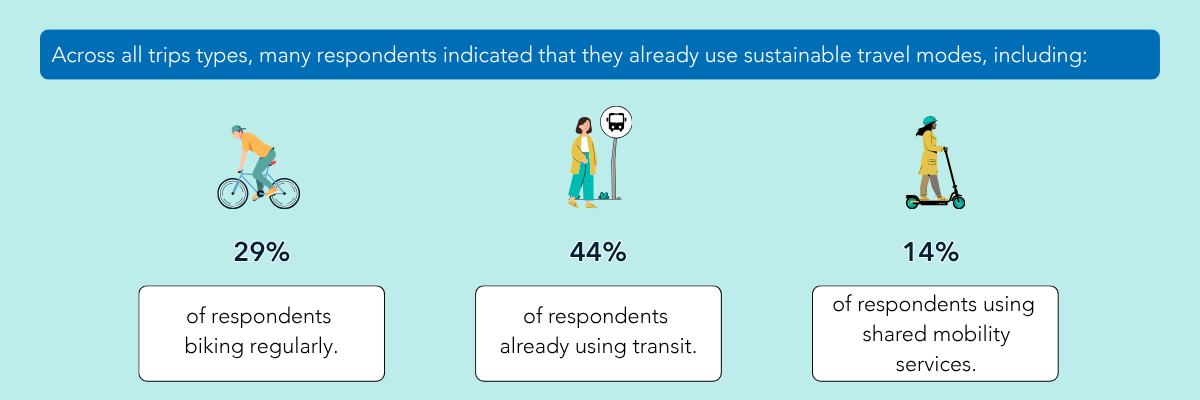
While transit is the most widely used option, biking is also popular with many respondents riding regularly. Biking showed the highest “untapped” interest, with 41% of respondents indicating that they would consider biking with better supports in place, despite current usage being lower than other modes of transportation.
These trends were generally consistent across work, school, and personal trips, suggesting broad interest in having more travel options.
Factors that Influence Sustainable Travel
We asked people who indicated that they already use or are open to using sustainable travel modes, to share more about what helped them, or what would help them make trips by that mode.
Across all modes, the feedback points to a common theme: people are more willing to shift their travel behaviour when options are convenient, safe, and easy to access.
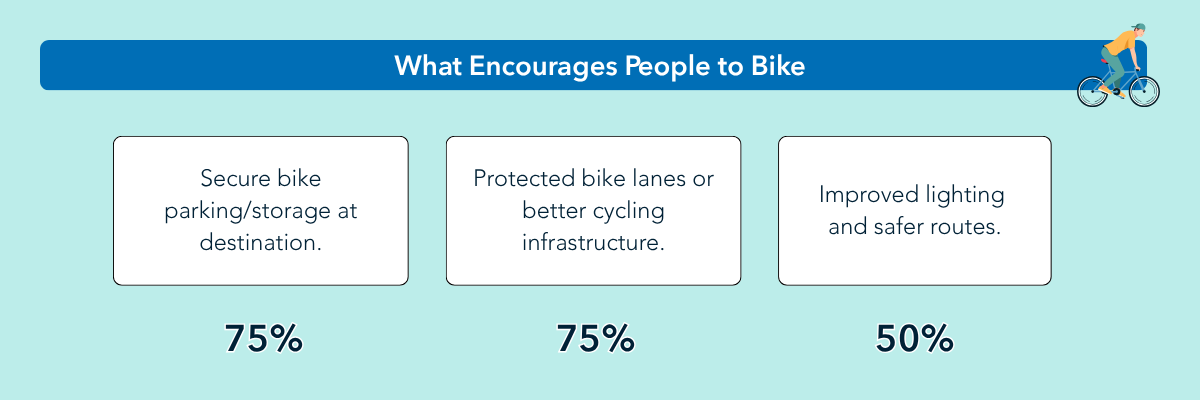
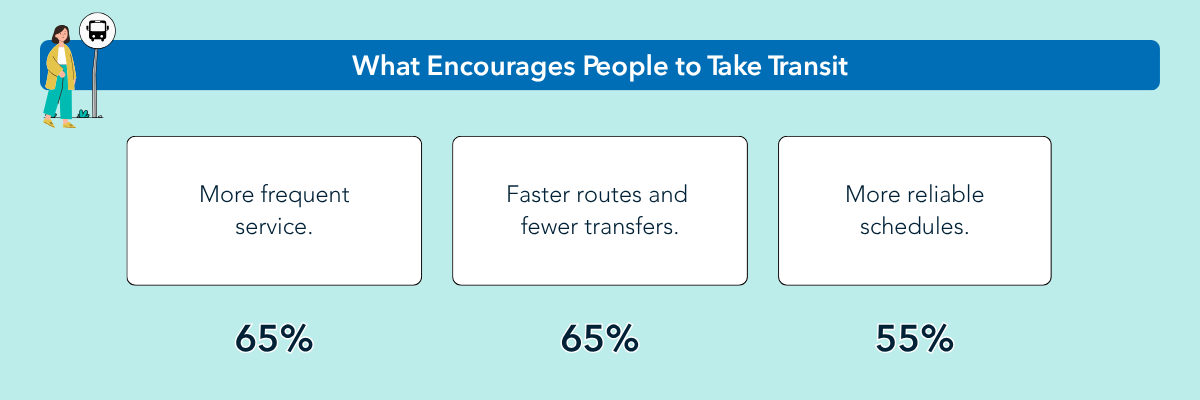
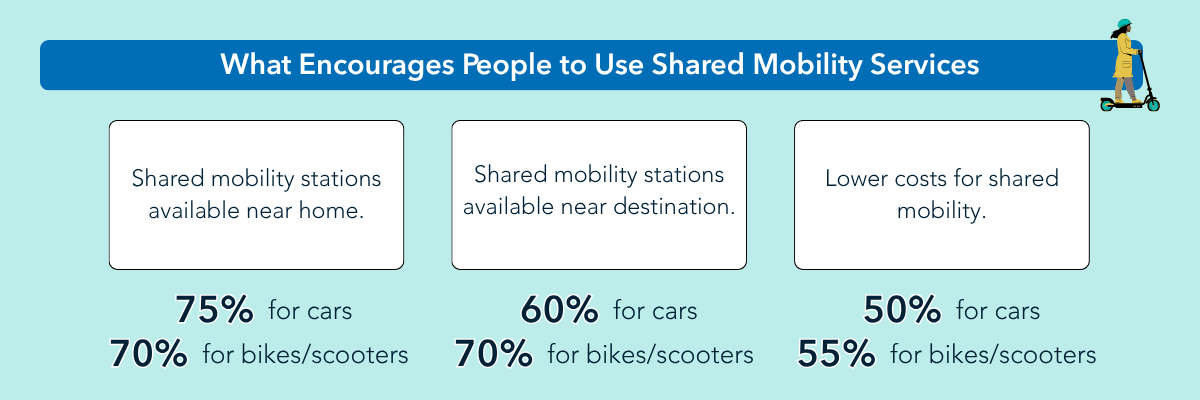
Respondents who already use, or would consider using a given travel mode, were asked what would encourage them (or has already encouraged them) to make more sustainable travel choices. The top responses were:
Takeaway
People who bike, or are open to biking, highlight that safety and end-of-trip facilities are critical. Many people are open to biking, but only if they feel comfortable riding, and confident their bike will be secure when they arrive.
Takeaway
Transit riders are less concerned with proximity to transit services and more focused on service quality. Frequency, travel time, and reliability are key to making transit competitive with driving.
Takeaway
Shared car and bike/scooter service interests were aligned, with their top three priorities ranked in the same order. Shared mobility choices are strongly tied to convenience. If vehicles are not located near where people live or travel, the service quickly becomes impractical. Cost was also identified as a significant barrier.
Barriers to Choosing Sustainable Travel
We also asked people who indicated that they would not consider using sustainable travel modes to share more about what prevents them from being willing to make trips by that mode.
Across each mode, the feedback highlights that barriers are often practical and experience-based, relating to travel time, cost, and availability.
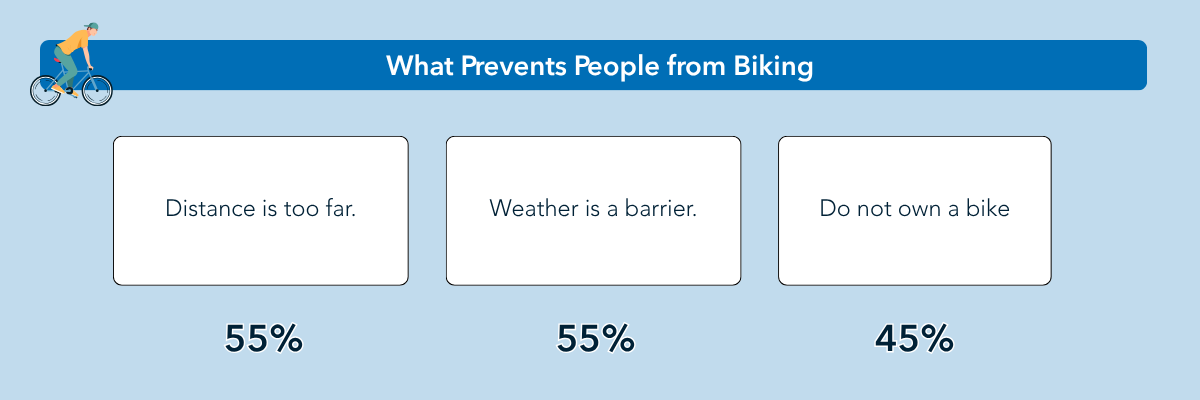
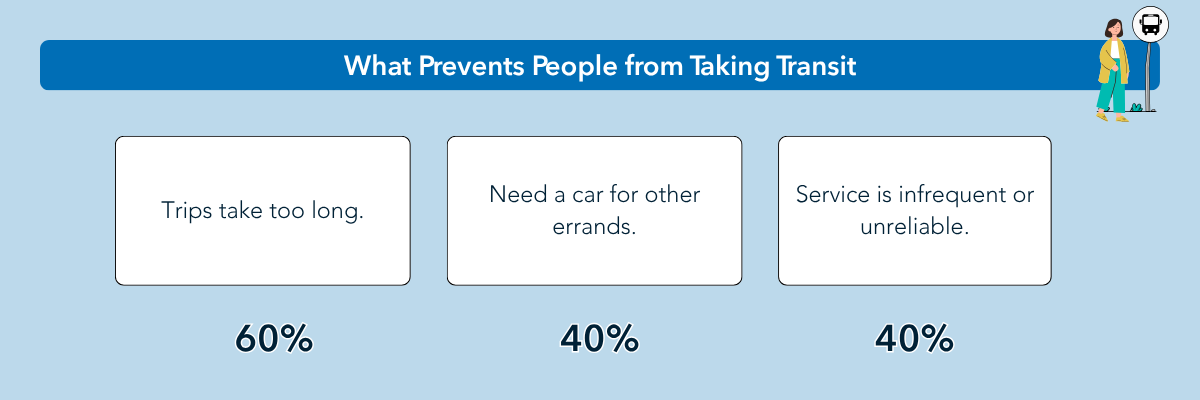
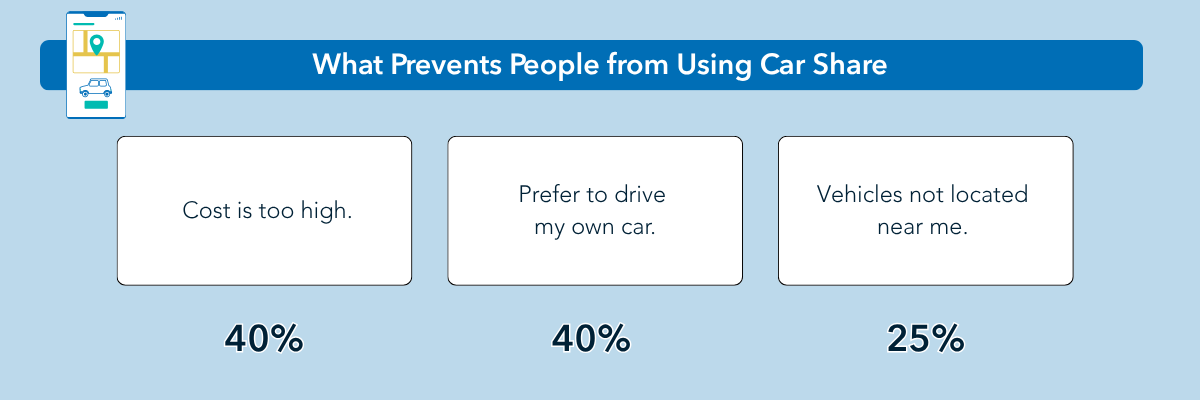
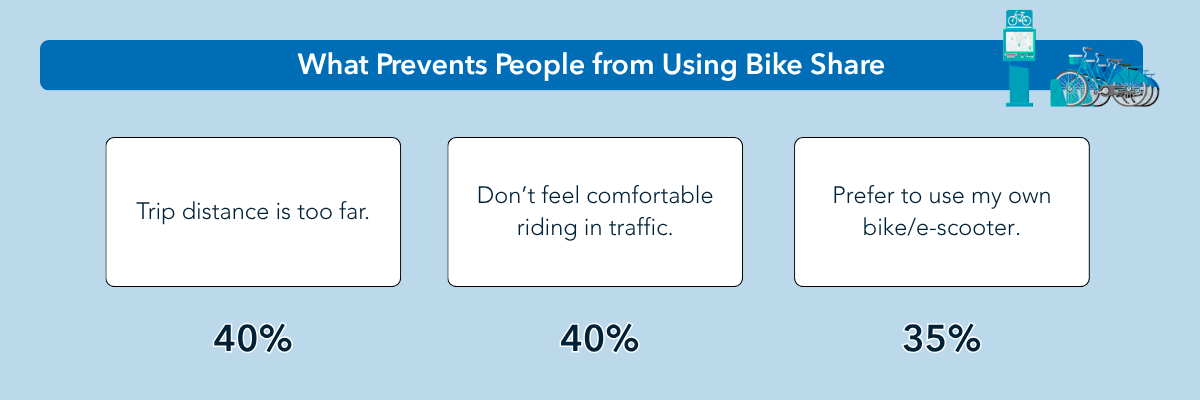
When respondents who indicated that they would not consider using a given travel mode were asked what prevents them from considering these modes, the top responses were:
Takeaway
Distance and weather are key limitations for biking, particularly for longer trips. While infrastructure improvements can address safety and comfort concerns for people already open to biking, the findings suggest that biking still may not be perceived as practical for all trip types or travel distances. This highlights the importance of integrating cycling with other sustainable modes and supporting multimodal trip options.
Take-away:
Transit is often perceived as less competitive with driving due to travel time and flexibility. Improving frequency, reliability, and network connectivity could support uptake and usage.
Take-away:
Cost, convenience, and vehicle availability are key barriers to carshare use. Many respondents continue to value the flexibility and familiarity of driving their own vehicle, suggesting that carshare services may be more appealing when they are easy to access, affordable, and integrated into everyday travel needs.
Take-away:
Barriers to bikeshare are most often related to trip practicality, safety, and convenience. Improving network connectivity and integration with other modes may help support greater use. Preference toward using a personal bike or e-scooter also emerged as a common theme, suggesting shared mobility services may not yet feel convenient or accessible enough to replace personal devices.
Key Takeaways
Bunt’s TDM Survey results highlight an opportunity to support more sustainable travel in communities across British Columbia. Many residents are already using options like transit and biking, and more are open to doing so if key barriers are addressed.
We heard that people want biking to feel safer, better connected to other modes for longer trips, and more convenient at their destination. For transit, priorities include faster, more frequent, and more reliable service. For shared mobility, interest is closely tied to availability and affordability, with respondents emphasizing the importance of lowering the cost of services and having vehicles or stations located close to where people live and travel. For bikeshare services, travel distance and safety concerns also emerged as important factors influencing uptake, suggesting that improving overall network connectivity and integration with other modes may help support greater use of sustainable transportation modes.
Overall, we heard the importance of providing people with connected and flexible transportation choices that work together to support a range of travel needs. Together, these insights provide a clearer picture of how people travel today and what influences their choices.
Interested in staying up to date on future surveys and insights? Sign up to our mailing list here.
Want to speak with a subject matter expert? Reach out to Christephen Cheng (Principal and Lead, Innovation) for more information.
In Case You Missed It
In our recent Insights blog, Transportation Demand Management (TDM): A Collective Effort Towards Building Sustainable Communities, we explore how TDM has evolved in British Columbia and Alberta, how people adapt their travel behaviours in response to congestion, and how TDM effectiveness is measured through various approaches such as engagement, studies, and analysis. Check it out!
Share this article